Top Reasons to Support Your Local Pizza Restaurant
@andersonwzld332
October 30, 2026 · 15 min read
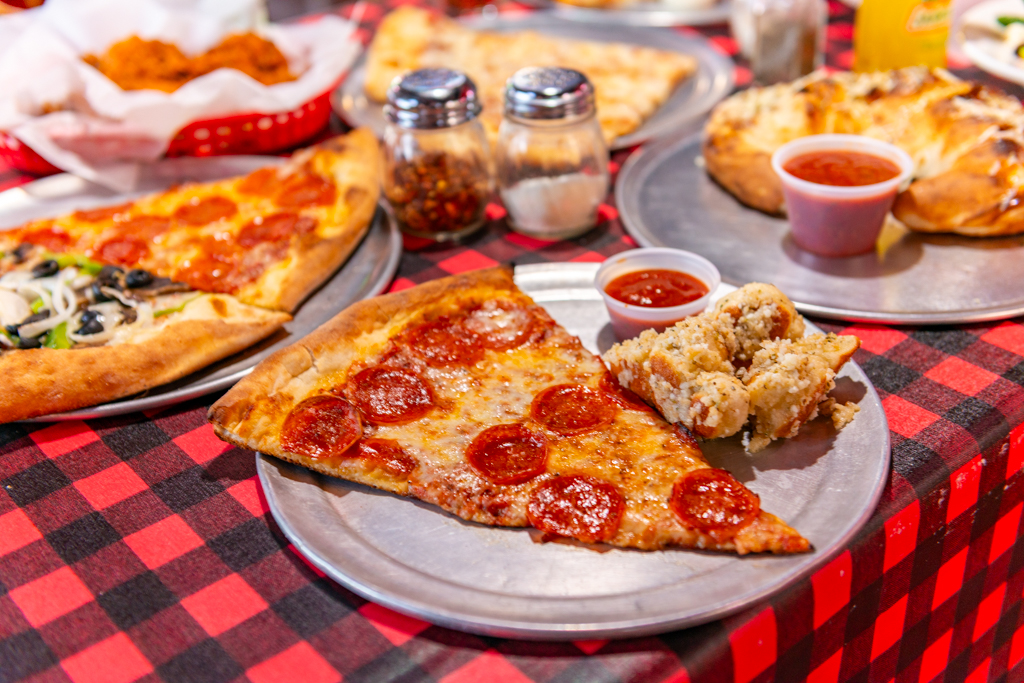


Walk into a neighborhood pizza restaurant on a Friday evening and you can usually tell, within a minute, what role it plays in the community. The owner might be working the counter while keeping an eye on the oven. A server knows three families by name. A teenager is picking up his first paycheck. Someone in the kitchen is shaping dough by hand because that is how they have always done it, even though it takes longer and costs more. None of that appears on a receipt, yet it is exactly what people support when they choose a local place over a national chain or a delivery app promotion.
Pizza is often treated like a simple purchase, a quick dinner after practice, a game-night default, an easy office lunch. But a local pizza restaurant is rarely just a place that sells pies. It is a small business with thin margins, demanding labor, expensive ingredients, and a direct stake in the well-being of the street it occupies. Supporting it is not charity. It is a practical decision that helps preserve quality, local character, and economic resilience.
That matters even more in food service, where convenience often hides the true cost of how meals are produced. The cheapest option on a screen is not always the best value for a neighborhood, and it is not always the best meal either.
The money stays closer to home
One of the clearest reasons to support a local pizza restaurant is economic. Independent restaurants tend to recirculate more of their revenue nearby than large chains do. The owner hires locally, uses area accountants and repair technicians, buys produce from regional vendors when possible, and spends profits in the same city or town where the business operates. That money does not vanish into a distant corporate structure. It continues moving through the local economy.
For customers, this can sound abstract until you break it down into ordinary, visible effects. The dishwasher gets replaced by a local appliance supplier. The dining room gets repainted by a contractor from across town. A high school student gets weekend shifts and later uses that income for gas, books, or community college. The restaurant sponsors a Little League team, donates gift cards to a school fundraiser, or feeds volunteers after a neighborhood event. Those are not side https://sethqolo858.image-perth.org/what-makes-a-pizza-restaurant-popular-with-tourists-and-locals benefits. They are part of how small businesses knit a place together.
A chain may employ local people too, of course, and that should be acknowledged. But decision-making at a chain usually happens elsewhere. Menu changes, sourcing, wage structures, marketing, and expansion plans are shaped by broader national targets. A local operator has different incentives. If the block suffers, the business suffers. If the area improves, the owner often improves with it.
Quality tends to show up in the details
People often talk about supporting local businesses as if it requires sacrificing convenience or consistency. With pizza, the opposite is often true. A good neighborhood pizza restaurant usually competes by paying attention to details a chain has a hard time matching at scale.
The dough is a good example. In many independent shops, dough is mixed in-house, cold-fermented, proofed according to the weather, and adjusted based on humidity or flour behavior. That is skilled work. It is not glamorous, and customers may never see it, but they taste the result in the crust. A dough with proper fermentation has structure, chew, color, and flavor on its own. It does not need to rely on excessive sugar, oil, or garlic butter coatings to feel satisfying.
The same is true of sauce and cheese. A local pizza restaurant may use a simpler tomato blend, fewer stabilizers, and a mozzarella mix chosen for stretch, browning, and salt balance rather than only for shelf life. Toppings are often prepped by hand, which means onions are sliced that day, mushrooms are not sitting in sealed bags for a week, and sausage is seasoned according to the shop’s own profile rather than shipped from a central commissary.
Not every independent place is excellent, and not every chain is poor. Experience matters here. There are local restaurants that coast on nostalgia and chains that maintain respectable standards. Still, when a neighborhood pizzeria is good, it is usually good because people inside that building are making daily judgment calls based on craft, not solely on process control manuals.
Independent pizza shops preserve local character
Most towns and city neighborhoods have lost businesses that once gave them a distinct feel. Hardware stores became big-box aisles. Bookstores became links. Diners became empty storefronts or luxury condos. Restaurants are among the last places where a neighborhood still has a chance to sound and taste like itself.
A local pizza restaurant often reflects the people who built it. In one town, that might mean a thin-crust style handed down through an Italian American family. In another, it might mean a wood-fired shop started by a couple who trained in Naples but adapted to regional ingredients. Somewhere else, it might be a counter-service pizzeria serving halal toppings, Detroit-style squares, and a green chile special that only makes sense in that part of the country.
That kind of variety does not happen by accident. It comes from owners who are free to make choices based on memory, migration, neighborhood demand, and personal obsession. Those choices give a local food scene its identity. Without independent operators, entire commercial districts begin to look interchangeable. The storefront signs change, but the experience flattens.
Pizza is especially powerful in this respect because it is so flexible. It can be deeply traditional or highly regional. It can absorb local ingredients, local habits, and local schedules. A pizza restaurant near a college may stay open late and build a menu around slices. A family-heavy suburb may favor large pies, early dinner rushes, and half-and-half orders for picky kids. A shop in a downtown business district may develop an efficient lunch trade with Roman-style slabs or grab-and-go squares. Supporting those businesses means keeping those local adaptations alive.
Owners notice regulars, and that changes service
There is a practical, everyday pleasure in being recognized by a place you visit often. A local pizza restaurant can offer a kind of hospitality that is difficult to standardize. The staff may know that you like your pie well-done, that your child wants no sauce, or that you always ask for extra cups of dressing because you are taking dinner to three people, not one. None of that requires a loyalty app. It comes from repetition, memory, and genuine interaction.
That familiarity affects more than comfort. It can improve the meal itself. A regular customer often gets more candid guidance. The cashier might tell you the meatballs are especially good that day, or that the oven is backed up and a calzone will take longer than usual. If a mistake happens, a local owner is more likely to fix it with urgency because the relationship matters. You are not just ticket number 348. You are someone they hope to see next week.
This is one of the least discussed benefits of supporting small restaurants. Better service is not always about polished formality. Sometimes it is simply about mutual recognition. Over time, that creates trust, and trust is a significant part of the dining experience.
Pizza restaurants are training grounds for work and leadership
For many people, a pizza restaurant is where they first learn how demanding service work can be. It may be a first job, but it is rarely an easy one. Workers learn punctuality, speed, teamwork, inventory basics, food safety, customer service, and what it means to keep going during a slammed dinner rush. Those lessons transfer far beyond hospitality.
Independent restaurants often provide especially hands-on opportunities because their teams are leaner. A young employee may start folding boxes, then move to prep work, then learn phones, expo, or delivery logistics. Someone who shows initiative can develop quickly because there are fewer rigid layers between entry-level work and real responsibility. In some shops, the jump from cashier to shift lead happens because the owner actually sees your work every day.
Supporting a local pizza restaurant helps keep those pathways open. It sustains jobs that are accessible, immediate, and rooted in practical skills. Not every employee will stay in food service, and that is fine. Good restaurants still contribute to the local workforce by teaching people how to handle pressure, solve problems, and take pride in a result they helped create.
The best local places can adapt faster than large brands
Large chains are built for consistency. That scale has advantages, especially in supply management and broad consumer recognition. But it also creates rigidity. A local pizza restaurant can pivot quickly when costs change, neighborhood tastes shift, or an opportunity appears.
If customers start asking for gluten-free crust, a local owner can test one next month rather than next fiscal year. If tomato prices spike, they may adjust sauce portions, tweak menu engineering, or promote styles less dependent on expensive ingredients. If nearby offices empty out and family traffic rises, they can rework hours and specials around school schedules. During difficult periods, that flexibility can be the difference between survival and closure.
Adaptation also supports creativity. Some of the best pizza specials happen because a cook had an idea, a vendor had excellent seasonal produce, or a neighborhood event created demand for something different. Chains can run limited-time offers, certainly, but those are typically built through layers of testing and approval. A local pizza restaurant can respond to real life while it is happening.
Customers benefit from that agility. Menus feel alive, not frozen. The shop remains in conversation with the community rather than merely operating inside it.
Supporting local often means supporting better accountability
When a restaurant owner works on-site, accountability becomes visible. Customers know where to direct praise and complaints. Staff know who sets standards. Problems are harder to hide behind automated forms or distant customer service channels.
That direct accountability matters in food service because so much can go wrong in small ways. Timing slips. Orders get mixed up. Ingredients arrive below standard. Equipment breaks. A local operator who depends on repeat neighborhood business has strong reasons to correct issues quickly and protect the restaurant’s reputation. They cannot rely on national ad budgets to smooth over local disappointment.
There is another side to this, too. Independent owners often feel the full force of setbacks that customers never see. Rent increases, insurance hikes, food cost volatility, delivery platform commissions, oven repairs, and labor shortages can erase profit faster than most diners realize. When customers choose to order directly, pick up instead of using an app, or dine in and tip fairly, they are not just making a convenience choice. They are helping a business retain enough margin to stay stable.
The delivery app era has made direct support more important
Many people assume that ordering from a local pizza restaurant through a third-party app is the same as supporting the restaurant itself. It is support of a kind, but it is often partial support. The economics are more complicated.
Commission fees charged by delivery platforms can be steep, especially for small operators already dealing with narrow profit margins. Even when those platforms bring exposure, the trade-off can be painful. The restaurant may receive less revenue per order, lose some control over timing and customer communication, and absorb blame for issues that begin with the app or the driver.
That does not mean people should never use delivery services. For some customers, they are essential. For some restaurants, they fill demand gaps. Still, if you want to do the most good for a local pizza restaurant, the strongest options are usually direct ones.
- Order from the restaurant’s own website or by phone when possible.
- Pick up your order if it is practical.
- Dine in occasionally, especially during slower periods.
- Tip staff fairly and review the place thoughtfully if the experience was good.
- Recommend the restaurant to neighbors, coworkers, and friends.
Those actions may seem small, but they have an outsized effect because they improve both margins and visibility.
Local restaurants help keep commercial streets alive
A lively pizza restaurant does more for a block than feed people. It creates foot traffic, light, noise, routine, and a sense that the street is still in use after working hours. That may sound intangible, but anyone who has watched a once-busy retail strip go dark understands the difference immediately.
Restaurants create a rhythm in a neighborhood. Parents stop in after games. Couples grab dinner before a movie. Delivery drivers come and go. Office workers walk over at lunch. Nearby businesses benefit from that movement. A bookstore next door sees more browsers. A dessert shop gets after-dinner traffic. A bar around the corner catches people waiting for a table. Commercial districts do best when customers have several reasons to be there at once.
When independent food businesses disappear, the loss spreads. Vacancies linger. Fewer people walk the street. The area feels less safe, less active, and less worth visiting. Supporting a local pizza restaurant is one of the more direct ways ordinary residents can help prevent that decline.
Family routines are built around places like this
Many households do not need another lecture about supporting local commerce. They need dinner that is reliable, affordable enough for a family, and likely to please everyone at the table. Pizza works because it solves a real domestic problem. That is exactly why local pizzerias matter so much. They become woven into routines that families depend on.
The details are familiar: Friday pickup after a long week, slices before a school event, a large plain and a salad after a late commute, two pies ordered for grandparents visiting on Sunday. Over time, the restaurant becomes part of family memory. Children remember where they sat, what arcade machine used to be in the corner, which cook tossed dough in the air, and who always gave them extra napkins. Those associations are not trivial. They are part of how communities feel stable and personal.
Chains can be part of family life too, and there is nothing wrong with that. But a local pizza restaurant often carries a stronger sense of place. It is not just pizza. It is your pizza place.
Price matters, but value matters more
People understandably compare menu prices. Independent restaurants can look more expensive, especially when ingredient costs rise. That price gap is not always large, but when it exists, it deserves an honest look rather than guilt-driven messaging.
A local pizza restaurant may charge more because it pays more for cheese, makes dough in-house, buys fresher toppings, staffs more carefully, or refuses to cut quality below a certain line. Those choices do not guarantee excellence, but they can explain higher prices. The better question is whether the meal delivers stronger value.
Value includes portion quality, ingredient integrity, service, and satisfaction. A cheaper pizza that arrives lukewarm, bland, and forgettable is not always the bargain it seems. A slightly pricier pie that actually tastes of fermented dough, tomatoes, basil, and browned cheese may feed the same number of people with far less disappointment.
There are limits, of course. Some local operators misread their market and price themselves beyond what regular customers can sustain. Others overload menus with trendy ingredients while neglecting basics. Supporting local does not mean abandoning judgment. It means rewarding restaurants that offer honest value, not just low sticker prices.
Good pizza reflects discipline, not just personality
There is a romantic image of the neighborhood pizzeria as a warm, chaotic place powered entirely by charm. In reality, the best local pizza restaurants combine personality with discipline. They manage proofing schedules, sanitation, labor costs, oven calibration, prep pars, dough yield, and delivery timing with real precision. That is one reason they deserve support. They are not merely cozy. They are skilled operations.
From the outside, a pizza business can appear simple. Flour, water, yeast, tomatoes, cheese, heat. But anyone who has worked around restaurants knows how much can go wrong between prep and pickup. Dough overproofs. Cheese breaks under excessive heat. A rush of orders wrecks timing. Delivery routes get tangled. Staff call out. Ingredient prices jump without warning. The restaurants that remain consistently good do so because somebody is paying close attention every day.
When customers support those places, they help preserve standards that are harder to maintain than they look. That has cultural value as well as economic value. Craft survives when it is patronized.
What your support communicates
Every purchase tells a business something. When people regularly choose a local pizza restaurant, they are voting for more than dinner. They are signaling that handmade food, accountable ownership, neighborhood presence, and local employment still matter. They are saying there is room in the market for a place with quirks, standards, and a face behind the counter.
That signal can shape what opens next. If independent shops thrive, more local entrepreneurs are willing to take the risk. If they fail while customers default to convenience alone, commercial strips become more standardized and more fragile. A community that wants distinctive businesses has to create conditions in which those businesses can survive, and customer habits are part of those conditions.
Support does not need to be dramatic. It can be ordinary and sustainable. Choose the neighborhood pizza restaurant for the office lunch instead of the default catering chain. Call in an order directly. Bring visiting friends there. Buy a gift card for someone new to the area. Keep the place in your weekly rotation if the food and service earn it.
The most compelling reason to support a local pizza restaurant is also the simplest. When these places disappear, they are hard to replace. Another storefront may open eventually, but it will not carry the same recipes, relationships, or accumulated memory. A local pizzeria is built pie by pie, regular by regular, year by year. If you have a good one nearby, it is worth keeping in business.